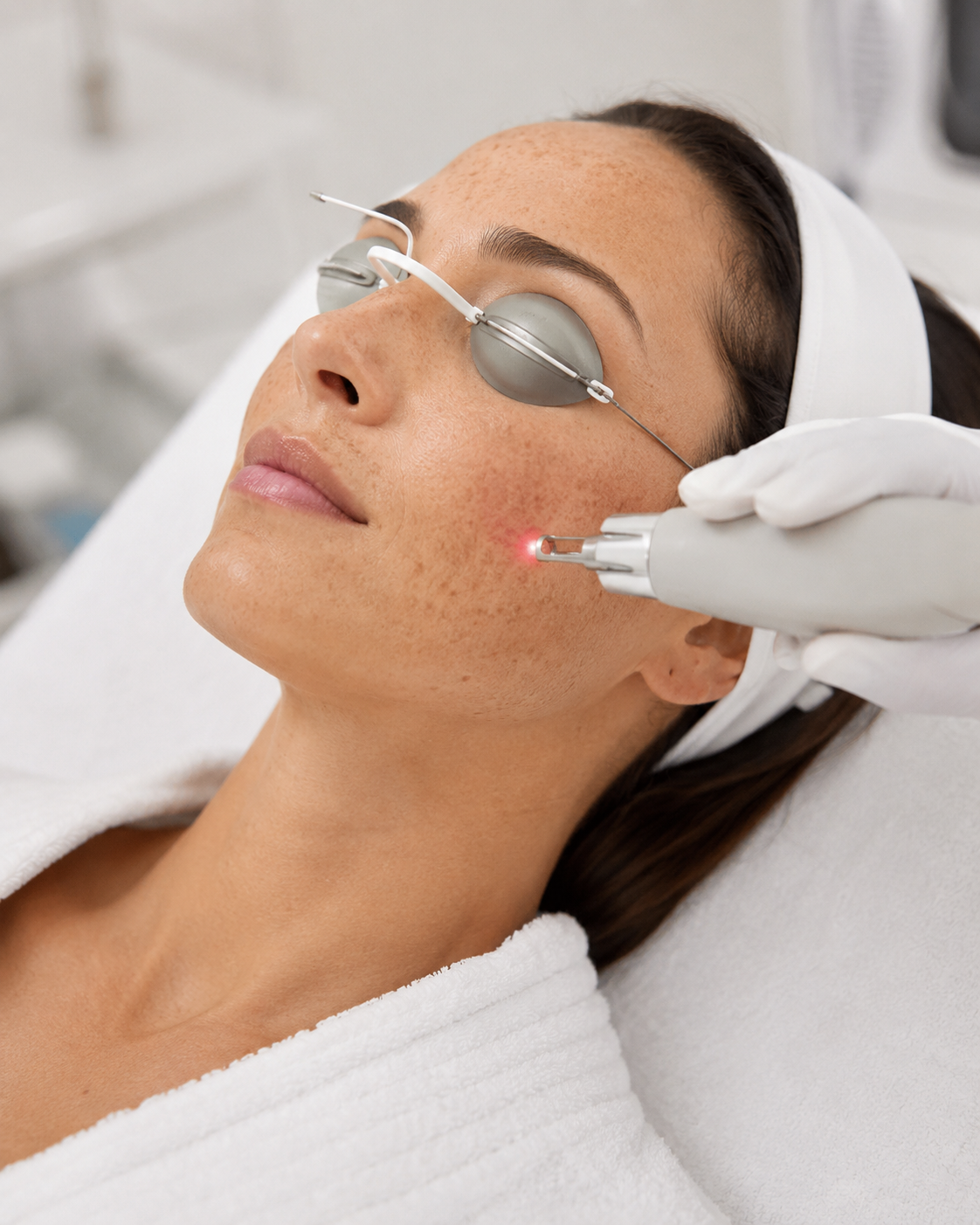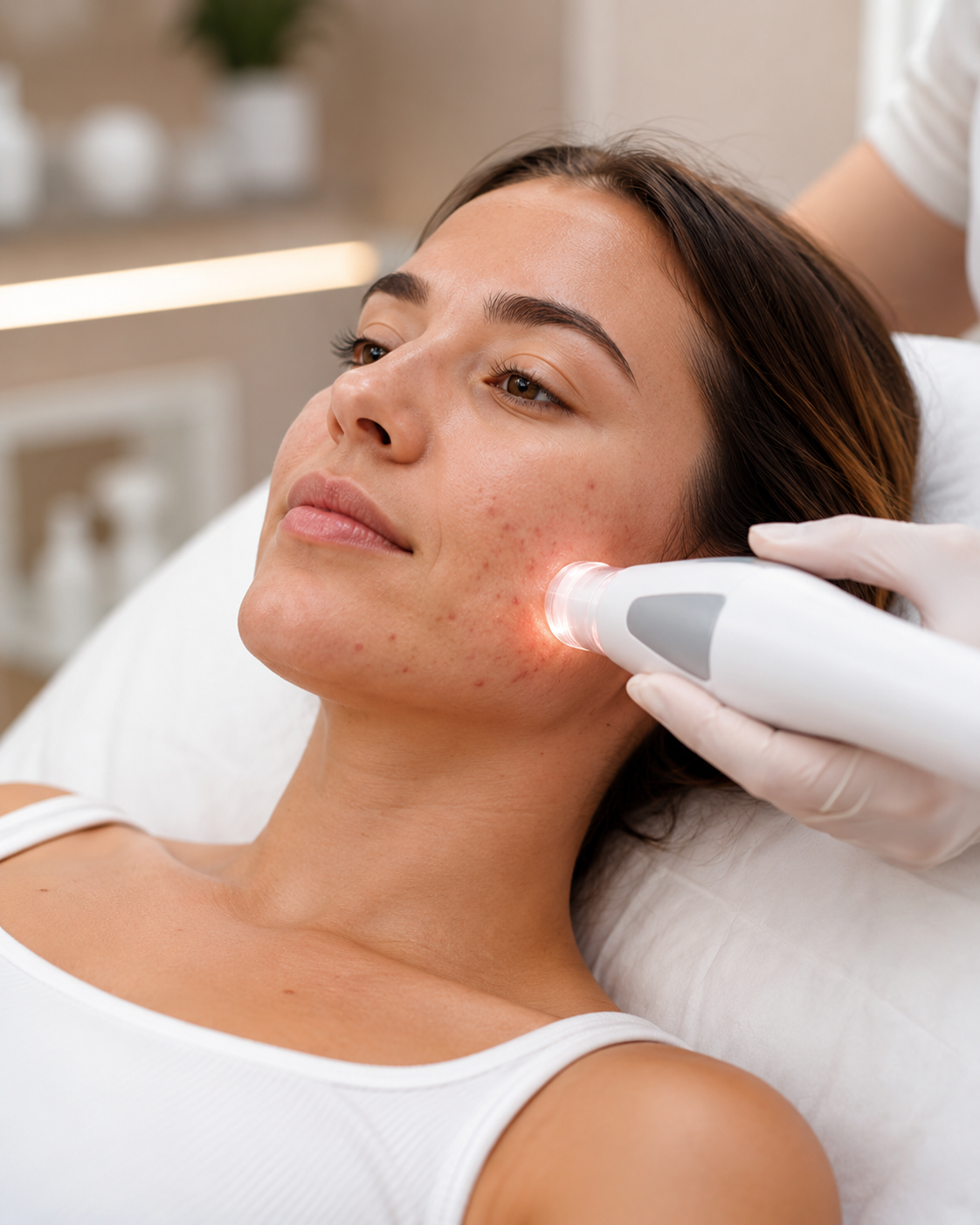
At VivaSkin Dermatology and Aesthetics in Wellesley, Massachusetts, we offer DermaV™ vascular laser treatment, an advanced laser system designed to safely and effectively treat unwanted blood vessels, vascular skin conditions, persistent redness, and selected scars.
Performed by an MD with fellowship training in cosmetic dermatology, DermaV™ precisely targets abnormal blood vessels while minimizing injury to the surrounding skin. Its advanced cooling technology enhances patient comfort, allowing treatment with little to no downtime.
DermaV™ is commonly used to improve:
Rosacea and facial redness
Broken facial capillaries
Spider veins on the legs and body
Cherry angiomas (red moles)
Early surgical scars
Red acne scars (post-inflammatory erythema)
Vascular birthmarks
Poikiloderma of Civatte (sun-related redness of the neck)
Every treatment is customized to your skin type, diagnosis, and aesthetic goals.
DermaV™ is an advanced vascular laser that delivers specific wavelengths of light that are selectively absorbed by hemoglobin, the pigment found in blood vessels.
The laser heats and closes unwanted blood vessels without significantly affecting the surrounding skin. Over the following weeks, the body naturally clears these treated vessels, reducing redness and improving overall skin appearance.
Unlike creams that temporarily reduce redness, DermaV™ addresses the underlying vascular component responsible for many chronic skin conditions.
Rosacea is a chronic inflammatory skin condition that often causes:
Persistent facial redness
Frequent flushing
Visible blood vessels
Facial sensitivity
DermaV™ targets the abnormal blood vessels associated with rosacea, helping reduce redness and visible capillaries. Because rosacea is a chronic condition, periodic maintenance treatments may be recommended.
DermaV™ effectively treats:
Broken capillaries around the nose
Spider veins on the cheeks
Visible blood vessels on the chin
Diffuse facial redness
Flushing
Many patients notice a clearer, more even complexion after treatment.
DermaV™ can effectively treat many small superficial spider veins on the legs and other areas of the body.
These thin purple, blue, or red veins are often a cosmetic concern and may develop due to genetics, aging, hormonal changes, pregnancy, prolonged standing, or sun exposure.
During your consultation, we evaluate the size, depth, and location of your veins to determine whether DermaV™ is the most appropriate treatment.
For larger reticular veins or symptomatic varicose veins, we may recommend referral for vascular evaluation or treatments such as sclerotherapy.
Cherry angiomas are common benign vascular growths that appear as bright red, purple, or burgundy spots on the skin.
They most commonly occur on the:
Face
Chest
Abdomen
Back
Arms
Legs
DermaV™ precisely targets these vascular lesions, often allowing them to fade significantly or disappear after one or more treatments.
Early intervention is one of the most effective strategies for optimizing scar healing.
After surgery, scars often remain red because they contain increased numbers of small blood vessels during the healing process.
DermaV™ can reduce this excess vascularity, helping decrease persistent redness and improve the cosmetic appearance of healing scars.
Early vascular laser treatment may be recommended after procedures such as:
Skin cancer surgery
Mohs surgery
Cosmetic surgery
Orthopedic procedures
General surgical procedures
Traumatic laceration repair
The optimal timing varies depending on the procedure and healing progress. During your consultation, your dermatologist will determine when laser treatment is appropriate.
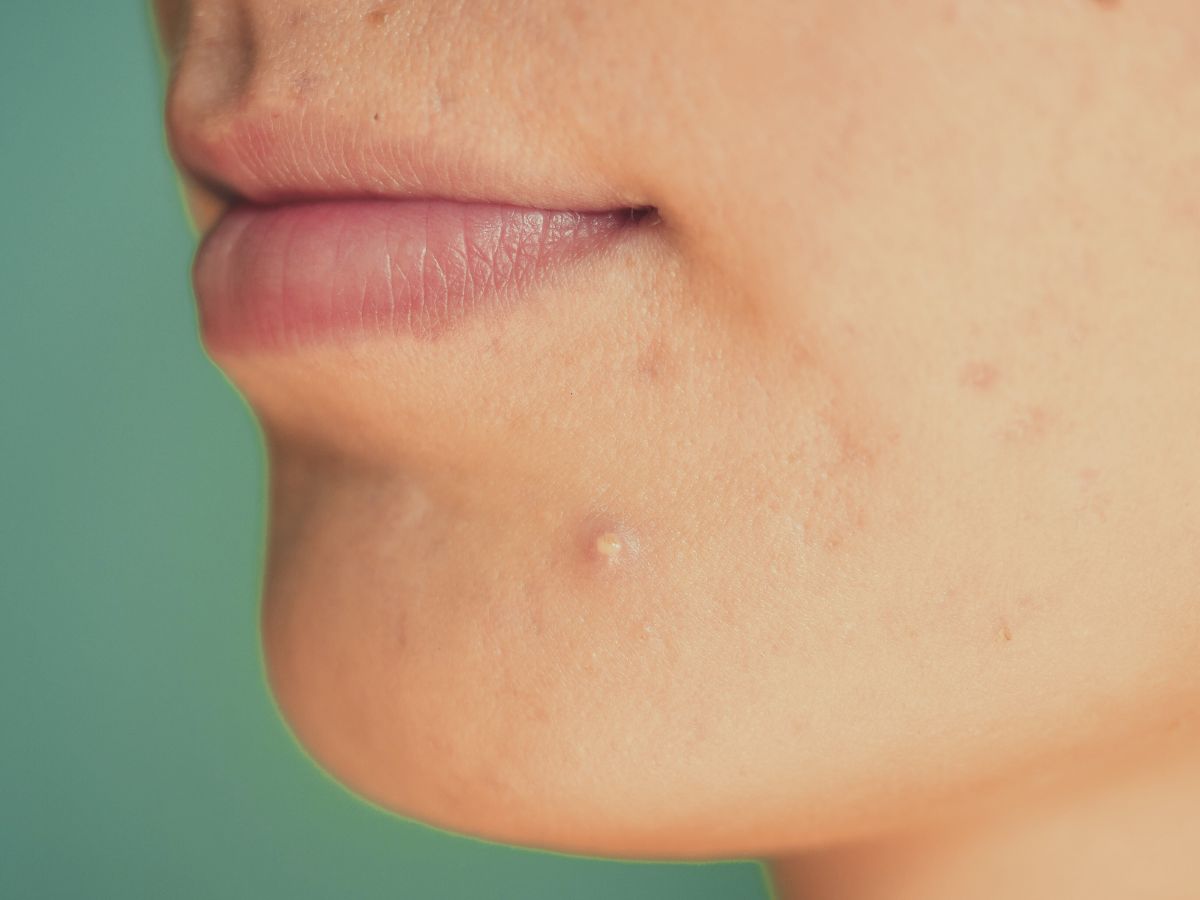
After inflammatory acne heals, many patients are left with flat red marks that persist for months.
These red marks are called post-inflammatory erythema (PIE) and are caused by dilated superficial blood vessels rather than excess pigment.
DermaV™ selectively treats these blood vessels, helping reduce persistent redness and allowing acne marks to fade more quickly.
Many patients are surprised to learn that acne scars often have two separate components:
Redness
Texture
DermaV™ improves the red vascular component of acne scars.
Depressed acne scars—including ice pick, rolling, and boxcar scars—typically require additional treatments such as:
Microneedling
Radiofrequency microneedling
Fractional laser resurfacing
Subcision
Collagen-stimulating treatments
For many patients, combining these procedures provides the most comprehensive improvement.
Selected vascular birthmarks, including some port-wine birthmarks, may improve with a series of DermaV™ treatments.
Treatment recommendations depend on the lesion type, location, and patient age.
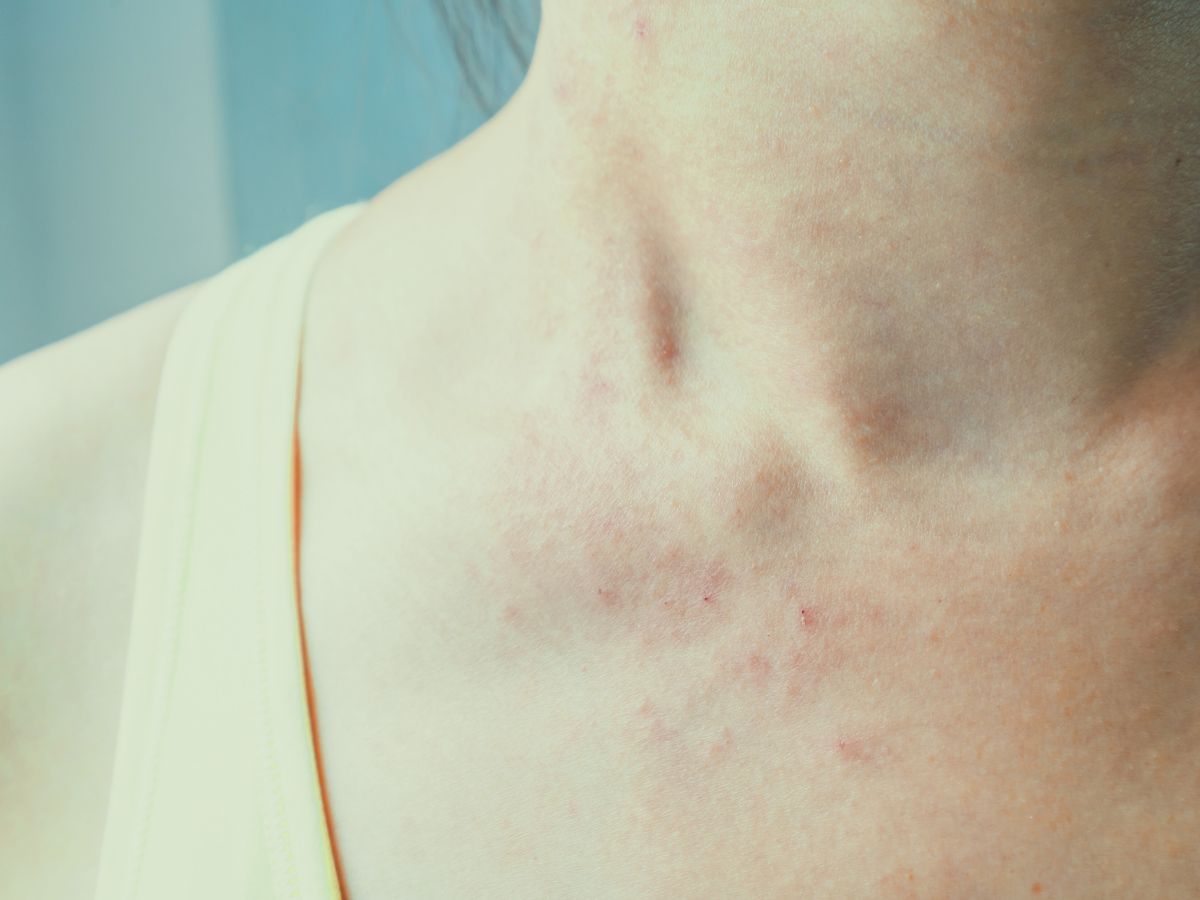
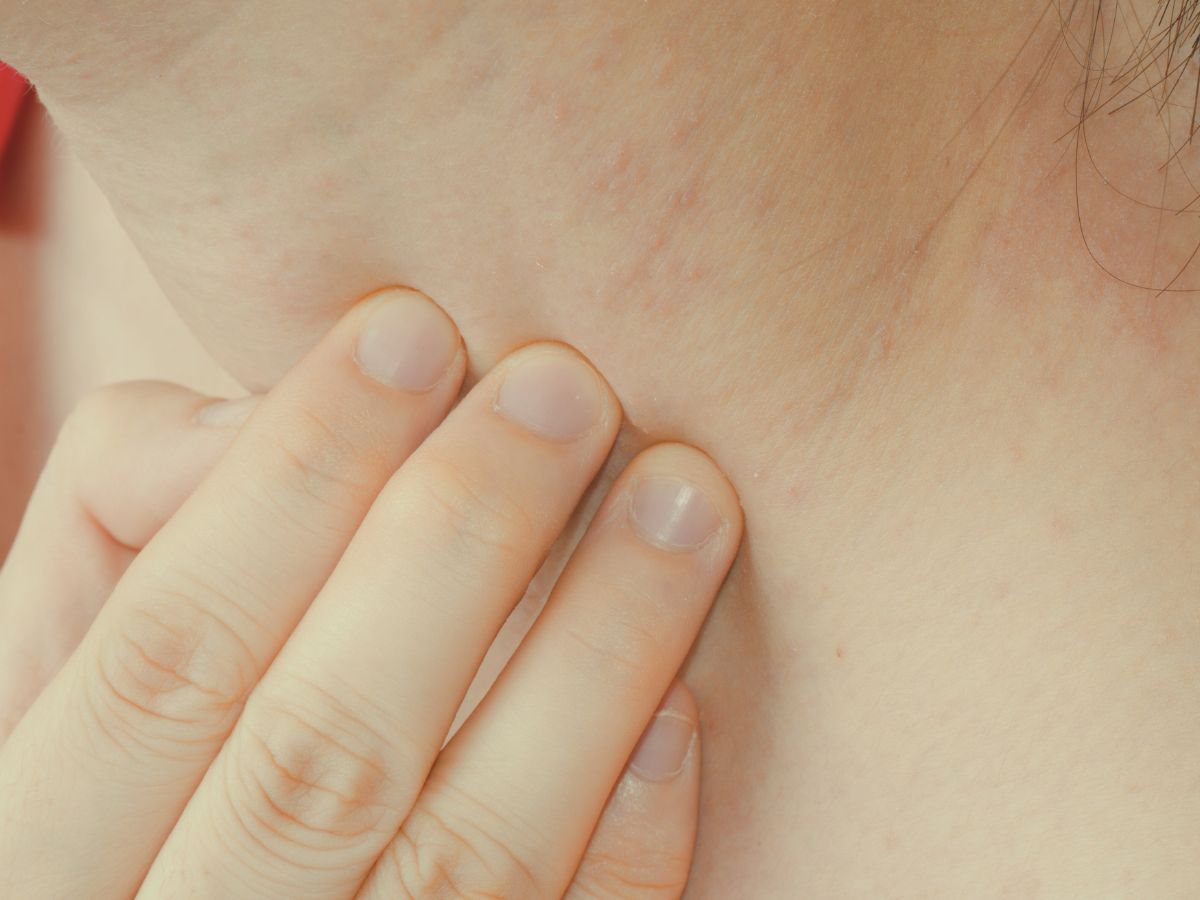
Poikiloderma of Civatte is a common condition causing redness, pigmentation, and visible blood vessels on the sides of the neck and upper chest due to chronic sun exposure.
DermaV™ can improve the vascular component, leading to a more even skin tone.
Patients choose DermaV™ because it offers numerous advantages:
Non-surgical treatment
Minimal downtime
Precise treatment of unwanted blood vessels
Improvement of persistent facial redness
Reduction of rosacea symptoms
Treatment of spider veins on the face, legs, and body
Removal of cherry angiomas
Improvement of early surgical scar redness
Reduction of red acne scars (post-inflammatory erythema)
Comfortable treatment with integrated cooling
Personalized treatment plans
Your appointment begins with a comprehensive consultation and skin evaluation.
During treatment:
The skin is cleansed.
Protective eyewear is provided.
Cooling technology improves comfort.
The laser delivers precise pulses of energy to the targeted blood vessels.
Patients often describe the sensation as a brief snapping feeling followed by cooling.
Treatment usually lasts between 10 and 40 minutes, depending on the size and number of treatment areas.
Most patients experience little to no downtime.
Temporary side effects may include:
Mild redness
Swelling
Temporary warmth
Mild bruising in some treated veins
Most patients return to work and normal activities immediately or within 24 hours.
Daily sunscreen use and sun protection are recommended following treatment.
The number of treatments depends on:
The condition being treated
Severity of redness
Size of blood vessels
Scar maturity
Individual healing response
Many vascular conditions improve with a series of treatments spaced several weeks apart.
Your dermatologist will develop a customized treatment plan based on your goals.